Project
BoardBite, Designed Menu Boards for Indie Restaurants
Prepared by
Eric VillalobosWatsonville, California
| Line | Item | Field |
|---|---|---|
| 01 | BoardBite, Designed Menu Boards for Indie RestaurantsProject | Project |
| 02 | Own projectClient | Client |
| 03 | Internal ProjectDiscipline | Discipline |
| 04 | Product BrandDiscipline | Discipline |
| 05 | Brand IdentityDiscipline | Discipline |
| 06 | Web & DigitalDiscipline | Discipline |
| 07 | 4Plates | Plates |
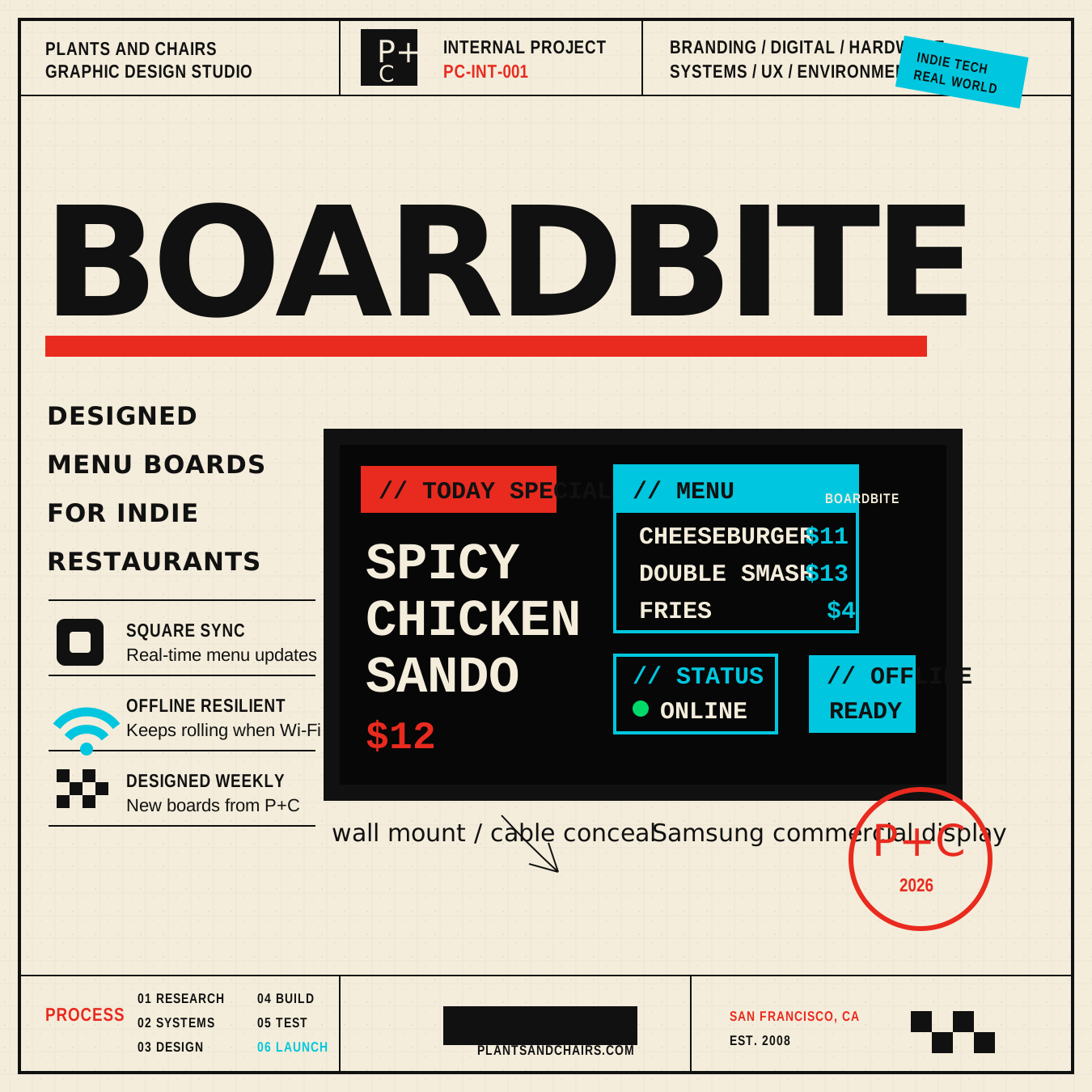
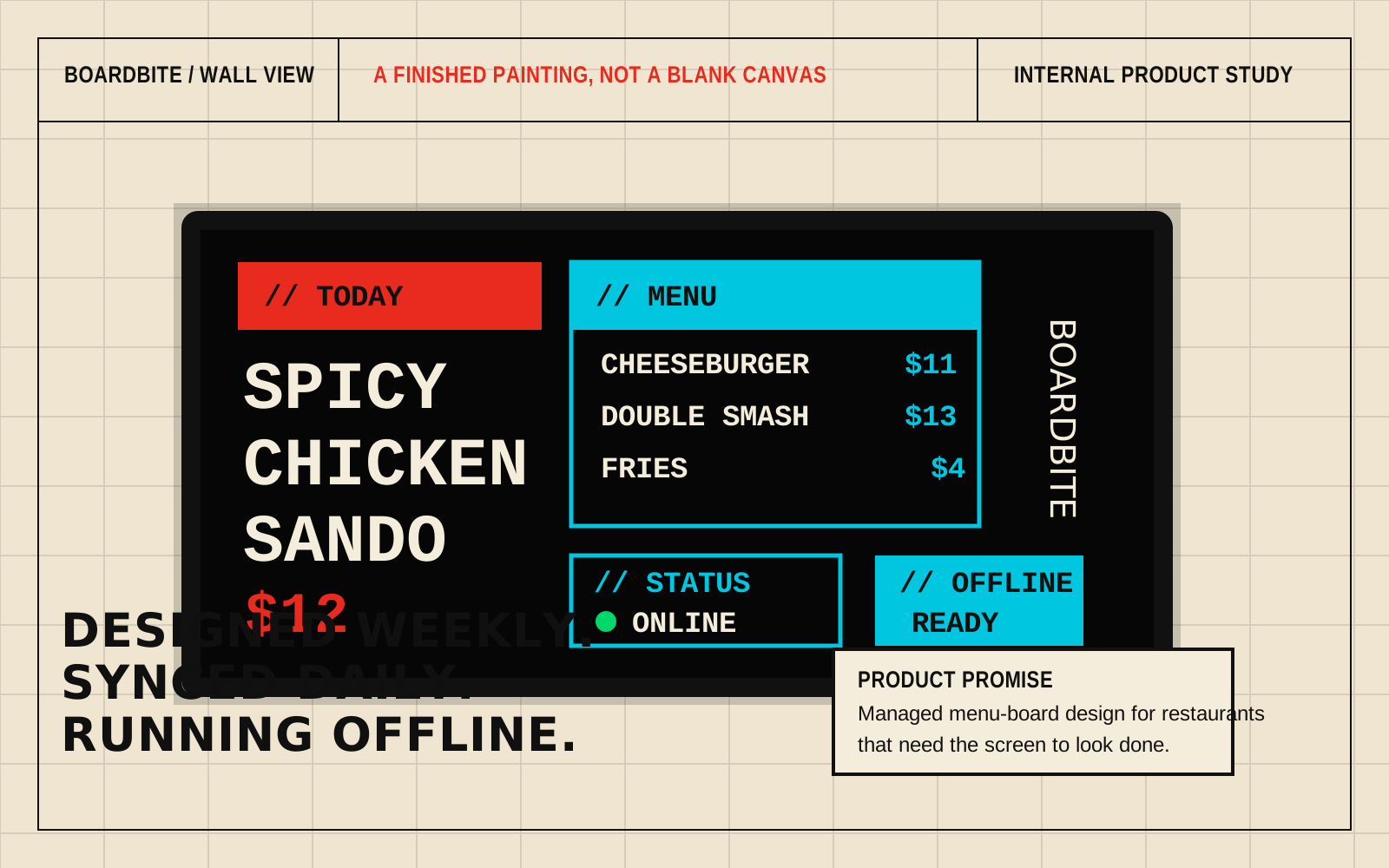
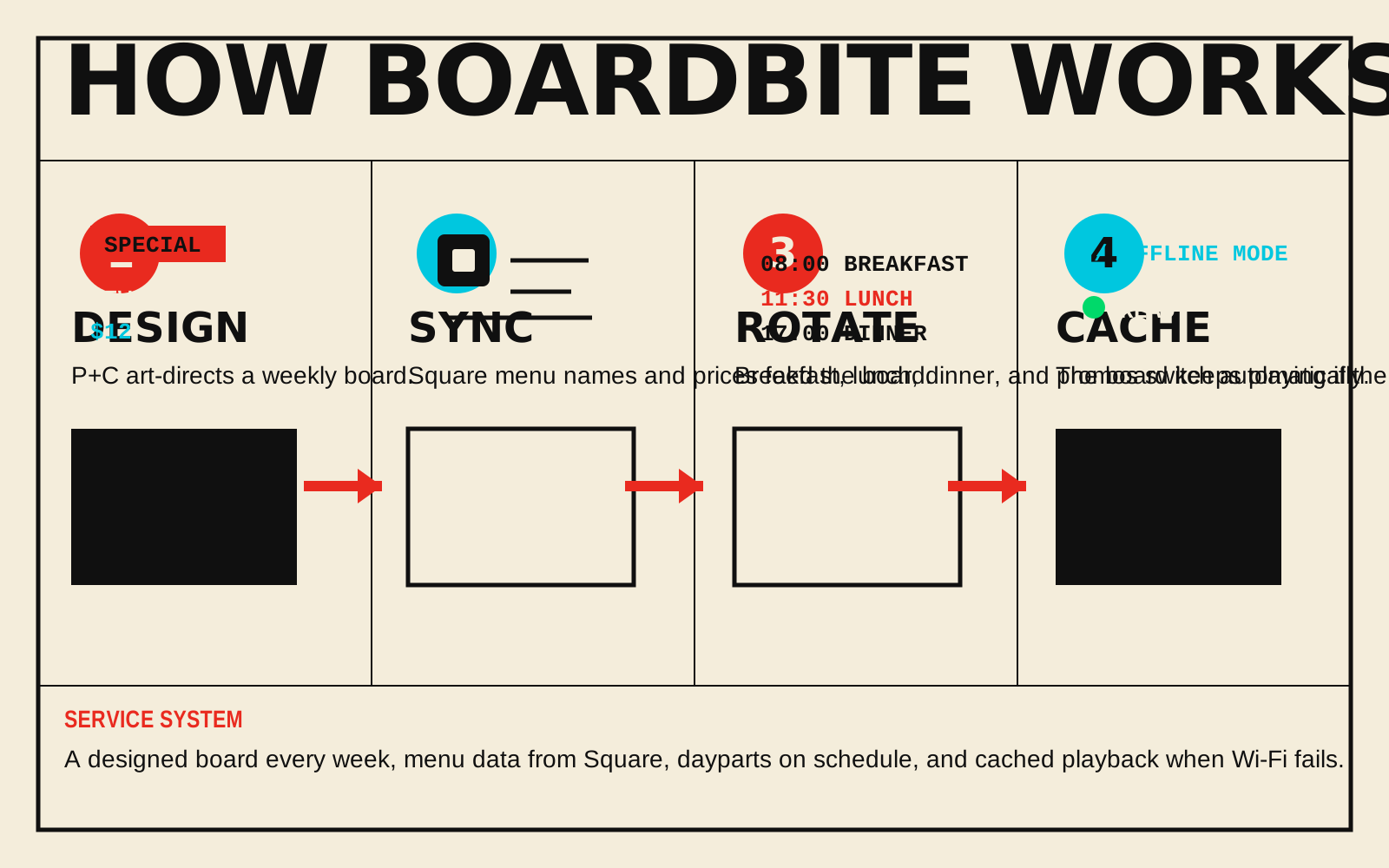
BoardBite is an internal Plants and Chairs product for independent restaurants that need menu boards to look designed, stay current, and keep working on the wall. The system combines art-directed weekly boards, Square menu sync, daypart scheduling, offline cache behavior, and a simple hardware kit so owners are not stuck managing blank signage software. The launch study turns the product into a case-study system: a sharp cover, screen-ready board graphics, product proof points, and outreach language that make the offer clear at thumbnail size and useful on the project page.
BoardBite started from a common restaurant problem: the wall menu is either stale, ugly, or another piece of software nobody has time to manage. The product frames menu boards as a managed design service from Plants and Chairs rather than a do-it-yourself screen tool.
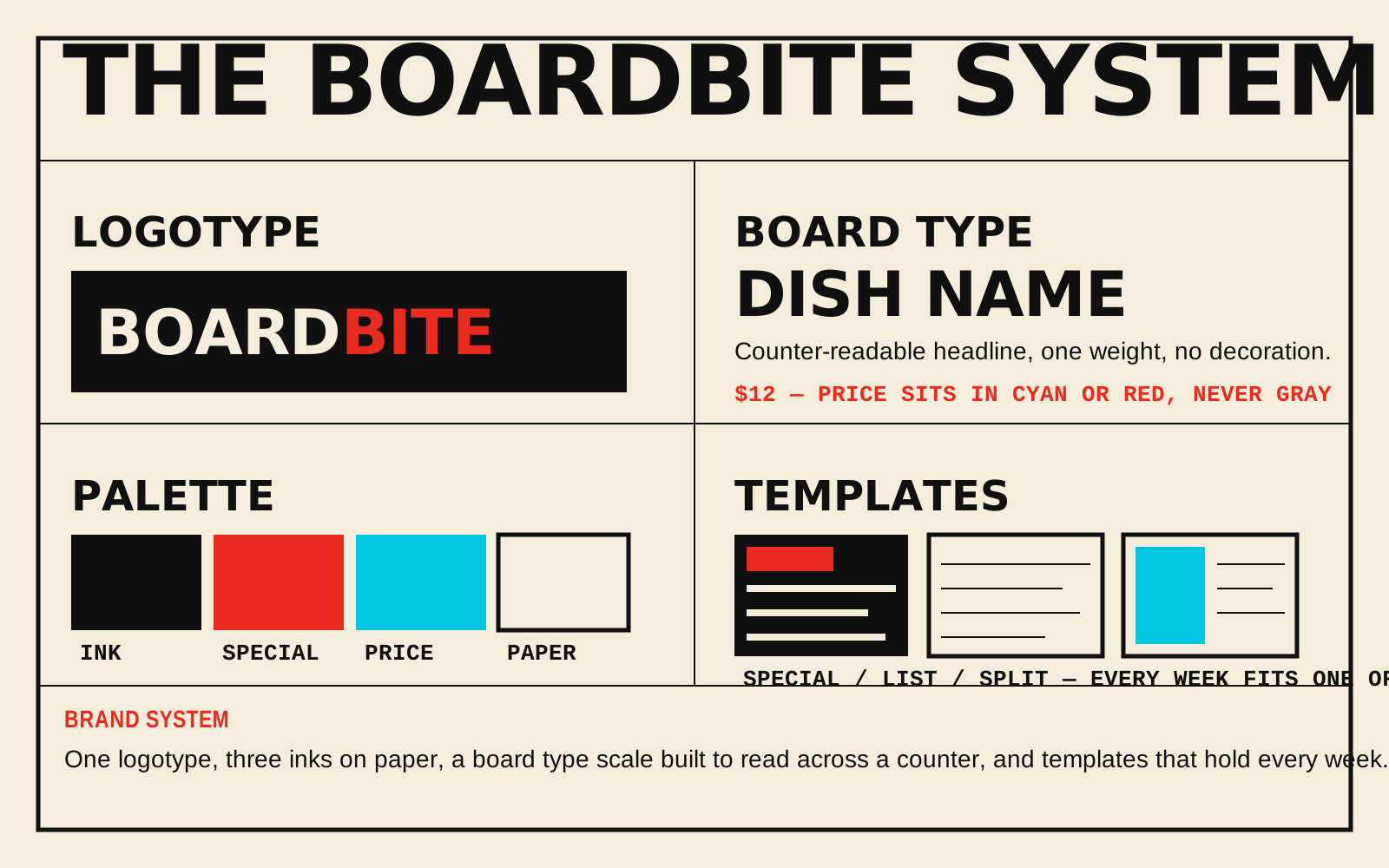
The visual system is direct and service-focused: heavy menu typography, cream paper, tomato red, black ink, cyan utility accents, and screen hardware cues. The content system is built around three claims that can be shown, not just said: designed weekly, Square-synced, and offline-resilient.
For the portfolio, the project is structured like a launch carousel and case study: cover first, then the wall-board product view, then the service mechanics, then the brand/system panel. It gives future internal projects a repeatable pattern for covers and deeper project pages without inventing fake client results.